Uranus
The ice giant that rotates on its side
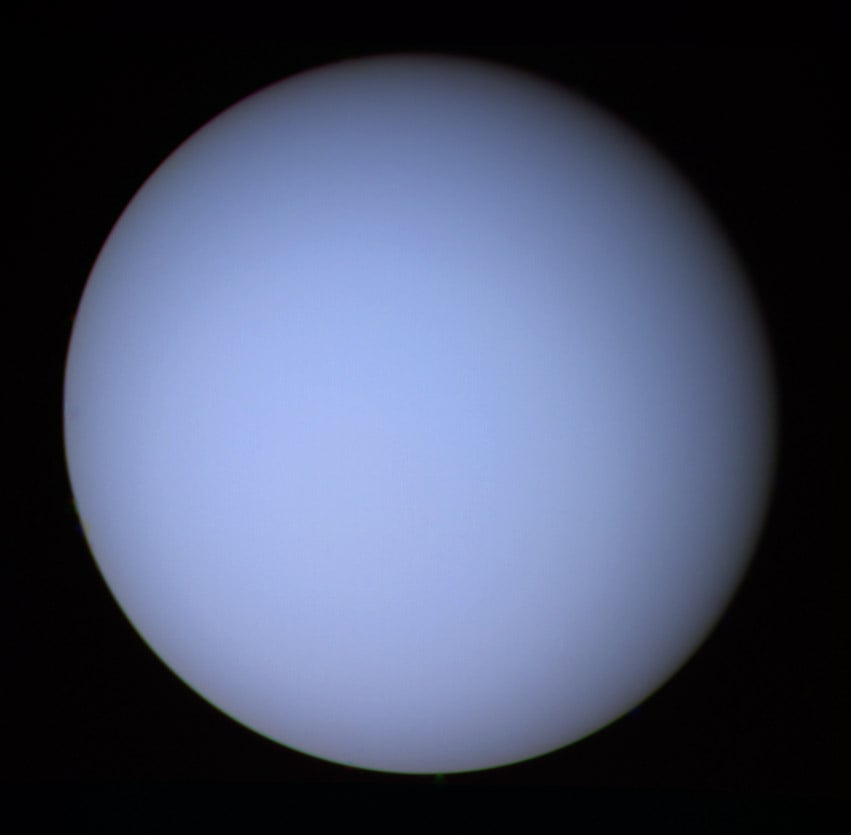
About Uranus
Uranus is the seventh planet from the Sun and the third largest in diameter in our Solar System. It's often described as an "ice giant" because it's composed mostly of water, methane, and ammonia ices above a small rocky core.
Uranus has the coldest planetary atmosphere in the Solar System, with temperatures dropping as low as -224°C. What makes Uranus truly unique is that it rotates on its side, with its axis tilted at about 98 degrees relative to its orbital plane.
Interesting Facts About Uranus
Sideways Rotation
Uranus rotates on its side with an axial tilt of 98 degrees. This extreme tilt causes extreme seasonal variations, with each pole getting about 42 years of continuous sunlight followed by 42 years of darkness.
Coldest Planet
Despite being closer to the Sun than Neptune, Uranus holds the record for the coldest temperature ever measured in the Solar System: -224°C.
Wind Speeds
Uranus has some of the fastest winds in the Solar System, reaching speeds of up to 900 km/h (560 mph) despite its frigid temperatures.
Faint Rings
Uranus has 13 known rings, all very faint and dark. They're composed of mostly large particles and dark material, unlike Saturn's bright ice rings.
Spacecraft Exploration
Only one spacecraft has visited Uranus so far:
Voyager 2 (1986)
The only spacecraft to visit Uranus flew by in January 1986. It discovered 10 new moons, studied the planet's unique atmosphere, and revealed details about its ring system and magnetic field.
Ground-Based Observations
Since Voyager 2, most discoveries about Uranus have come from telescopes like Hubble and advanced ground-based observatories, which have revealed seasonal changes and discovered more moons.
Future Missions
NASA and ESA are considering several mission concepts to return to Uranus, including orbiters and atmospheric probes that could launch in the 2030s.
How Uranus Compares
Size Comparison
Uranus is about 4 times wider than Earth. If Earth were a nickel, Uranus would be about as big as a softball.
Year Length
One year on Uranus equals 84 Earth years. A person born on Uranus would celebrate their first birthday at age 84 in Earth years!
Composition
Unlike Jupiter and Saturn (gas giants), Uranus is an ice giant, meaning it has more "ices" like water, methane, and ammonia in its composition.